


Custom Slatted Panel
Natural Wood Veneer Layer:
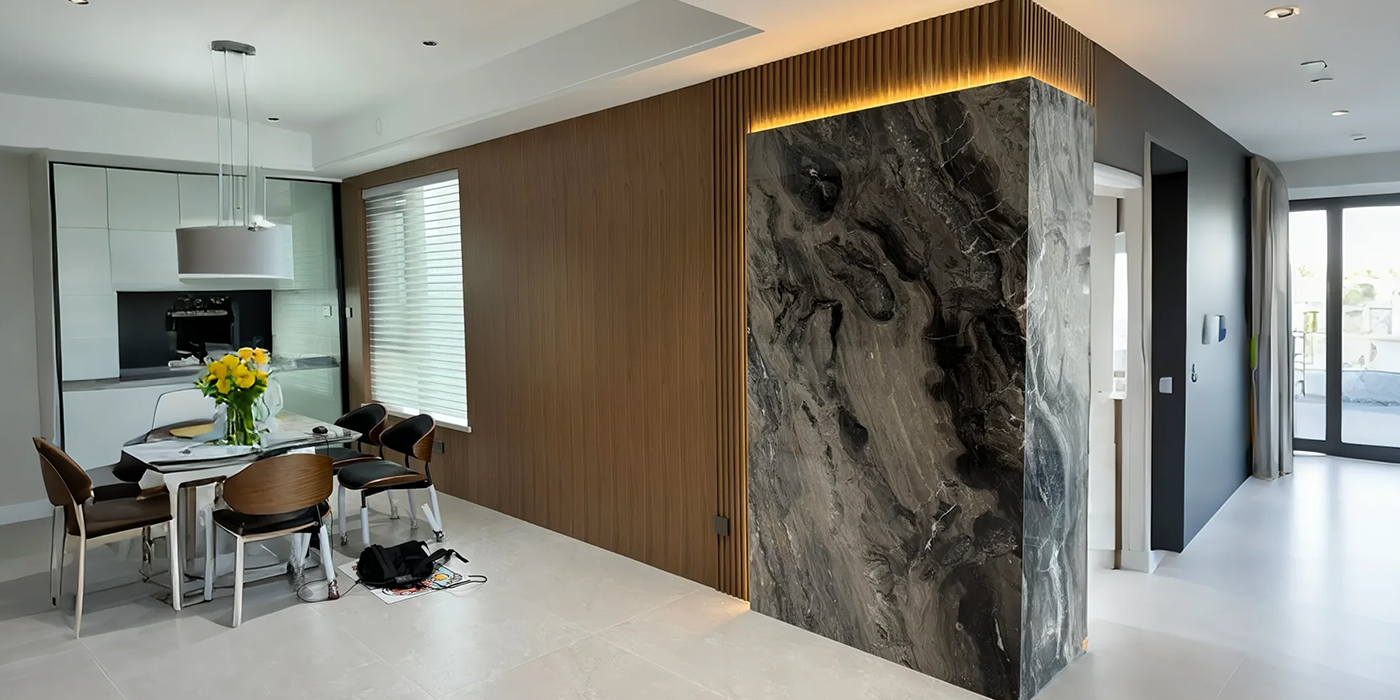
Faithfully replicates the grain of real wood—such as walnut’s cathedral patterns or white oak’s straight grain. The surface offers a warm, tactile feel, visually indistinguishable from solid wood slat panels.
Structural Core Layer:
Uses multi-ply solid wood board or MDF for the base, offering superior stability over solid wood. This solves the common issue of cracking in solid wood slats due to humidity or temperature changes—making it ideal for humid southern regions or heated northern interiors.
Structural Advantages:
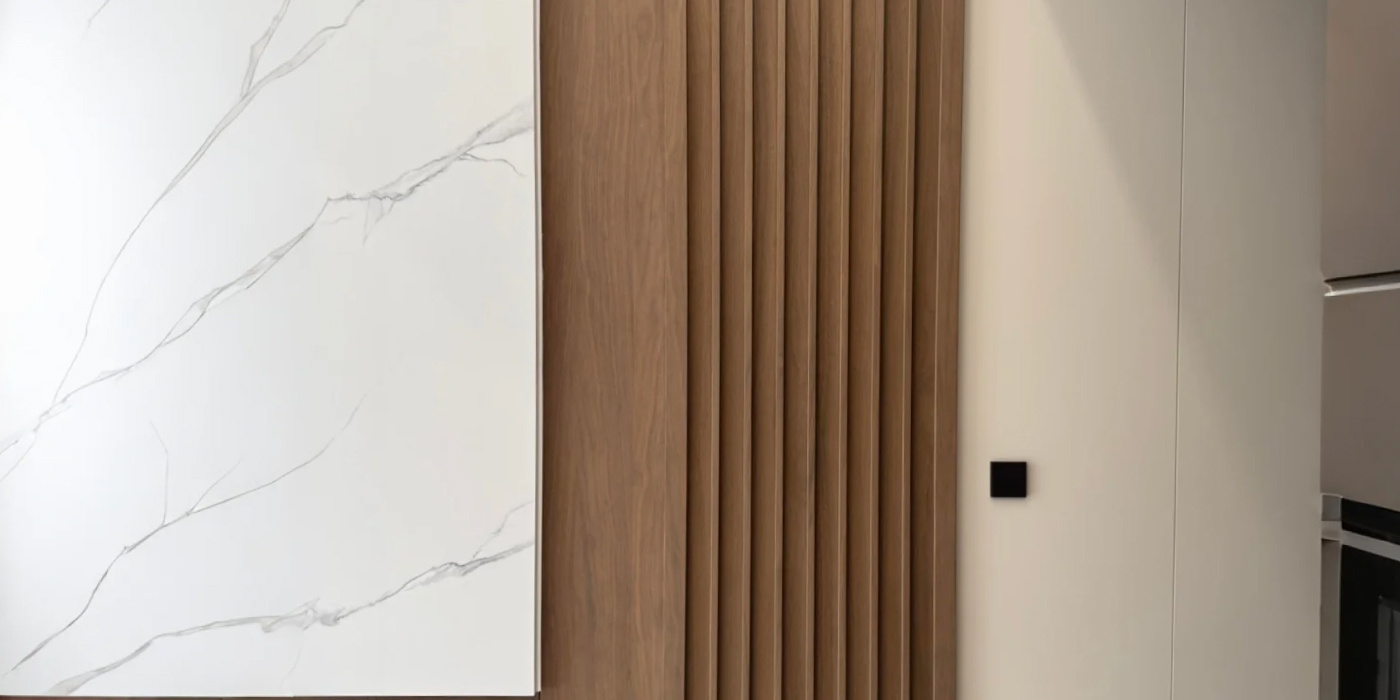
Each slat is assembled using mortise-and-tenon or precision joining techniques, and fully wrapped in wood veneer—even around the edges. This avoids grain breakage and ensures a consistent, seamless appearance throughout the panel.
Eco-Friendly and Cost-Efficient
The veneer is bonded using eco-friendly adhesives, such as plant-based starch glue, while the core material meets E0-grade environmental standards. Total formaldehyde emissions are kept at or below 0.025 mg/m³, surpassing national requirements—ideal for enclosed spaces like living rooms and bedrooms.
Costing just 50–60% of solid wood slats, this solution delivers the same natural look and feel, making it perfect for homeowners who want a warm, wood-inspired interior without exceeding their budget.
Installation Guidelines
Transportation & Storage:
Wrap slatted panels in moisture-proof film to prevent veneer damage. Store panels flat and level to avoid deformation of individual slats.
Mounting Method:
Choose the installation method based on the application:
For wall-mounted slatted panels, use concealed clips + expansion screws to avoid damaging the wall’s appearance.
For freestanding partitions, add a load-bearing base for stability and leave a 5 cm clearance from the floor to prevent moisture buildup.
Space Compatibility:
Before installation, check that the wall or floor is level. If uneven by more than 3 mm, surface leveling is required to avoid uneven stress that may cause veneer cracking.

Daily Maintenance
Cleaning:
Wipe the surface with a dry or slightly damp cotton cloth—avoid rinsing directly with water. Use a soft-bristle brush to remove dust from the slat gaps. For stubborn stains, apply a small amount of neutral cleaner (e.g., mild soap water), and dry the surface immediately with a clean cloth.
Protection:
Avoid direct sunlight to prevent veneer discoloration—UV-protective film is recommended. Ensure heating or AC vents do not blow directly on the slats to prevent localized drying and cracking of the lacquer surface.
Repair:
For minor veneer damage or chipped paint, apply a color-matched veneer repair paste (tinted as needed), then sand and wax the area after drying. This restores the finish with minimal cost—far lower than the cost of repairing solid wood slats.


Product Series