


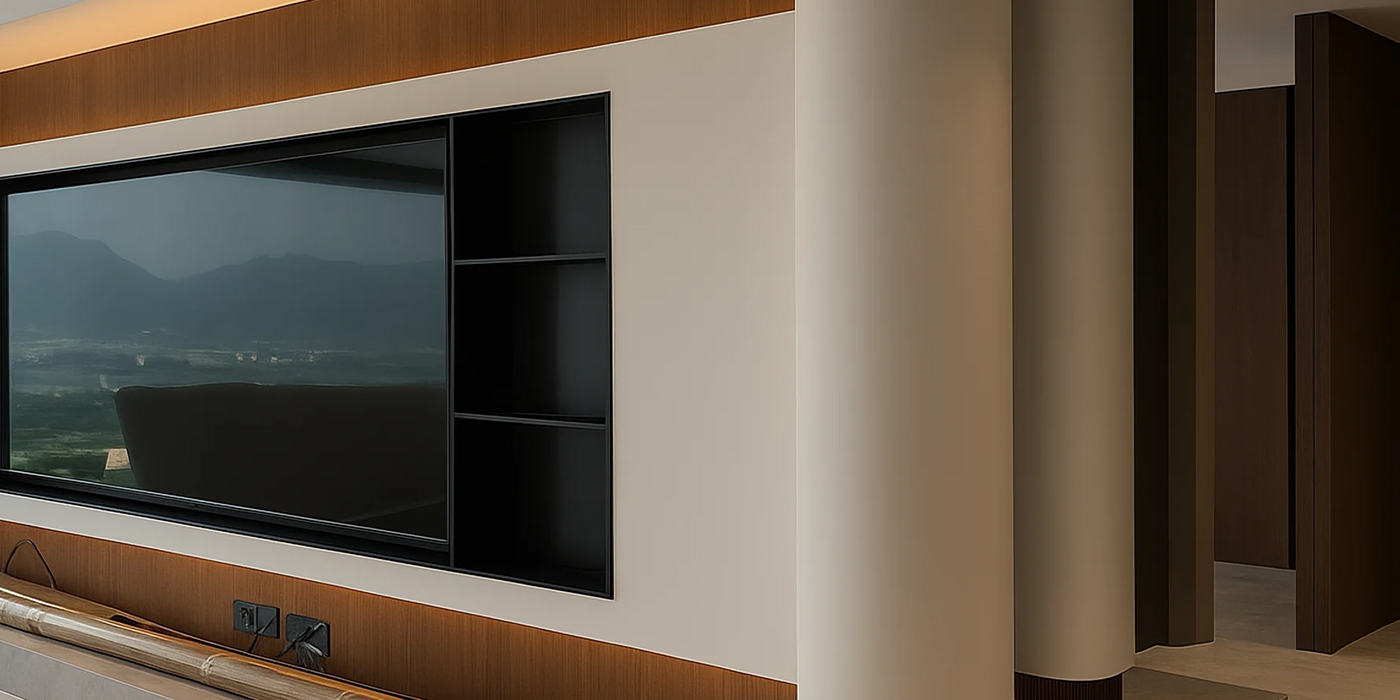
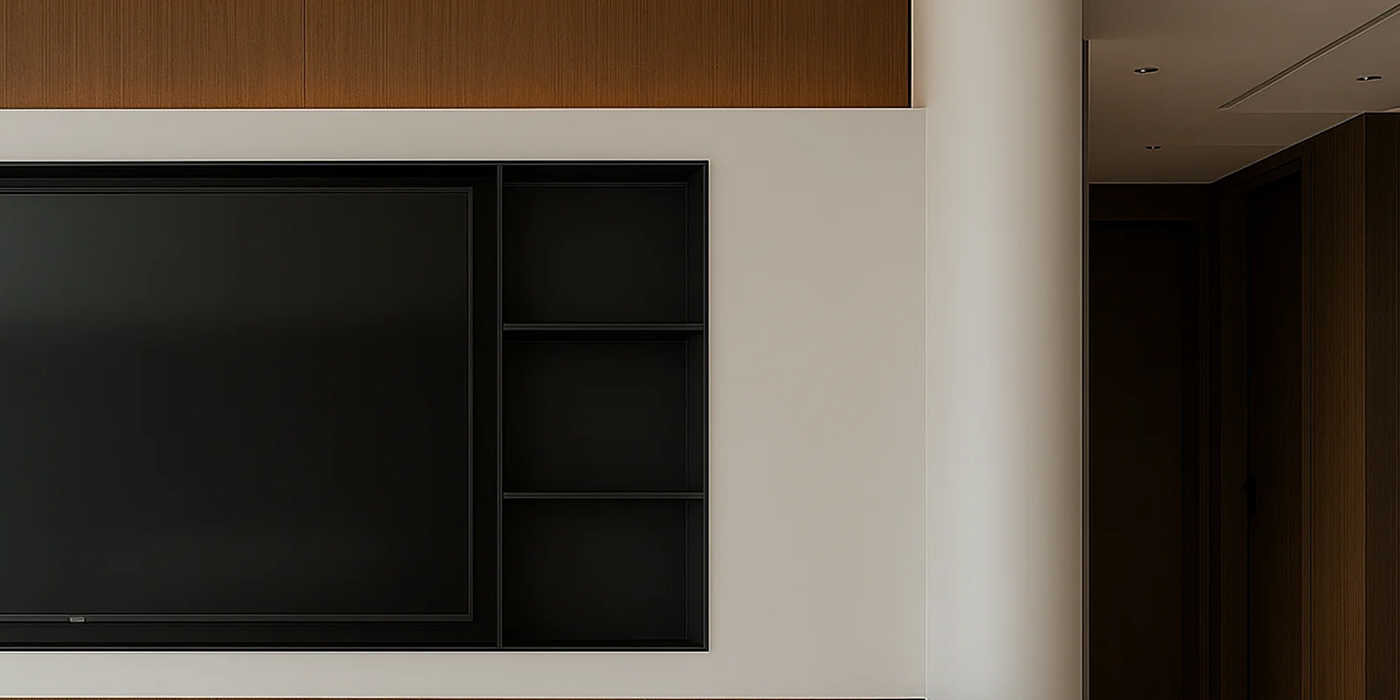
Custom curved panel
Solid Wood Veneer:
Primarily using walnut, white oak, and cherry veneer. Thin veneers naturally conform to curved surfaces, while thicker veneers (>0.5 mm) are prone to wrinkling or cracking due to rigidity. (In contrast, flat veneer products have lower flexibility requirements.)
Core Material Support:
Curved structures require custom-engineered core panels. For small curves (e.g., cabinet corners), multi-ply solid wood panels (≥9 layers, cross-bonded) are used for superior bending strength. For large curves (e.g., feature walls), a “multi-ply core + reinforced framing” structure ensures shape stability and a load-bearing capacity of 5 kg/m²—stronger than standard MDF boards.
Structural Advantage:
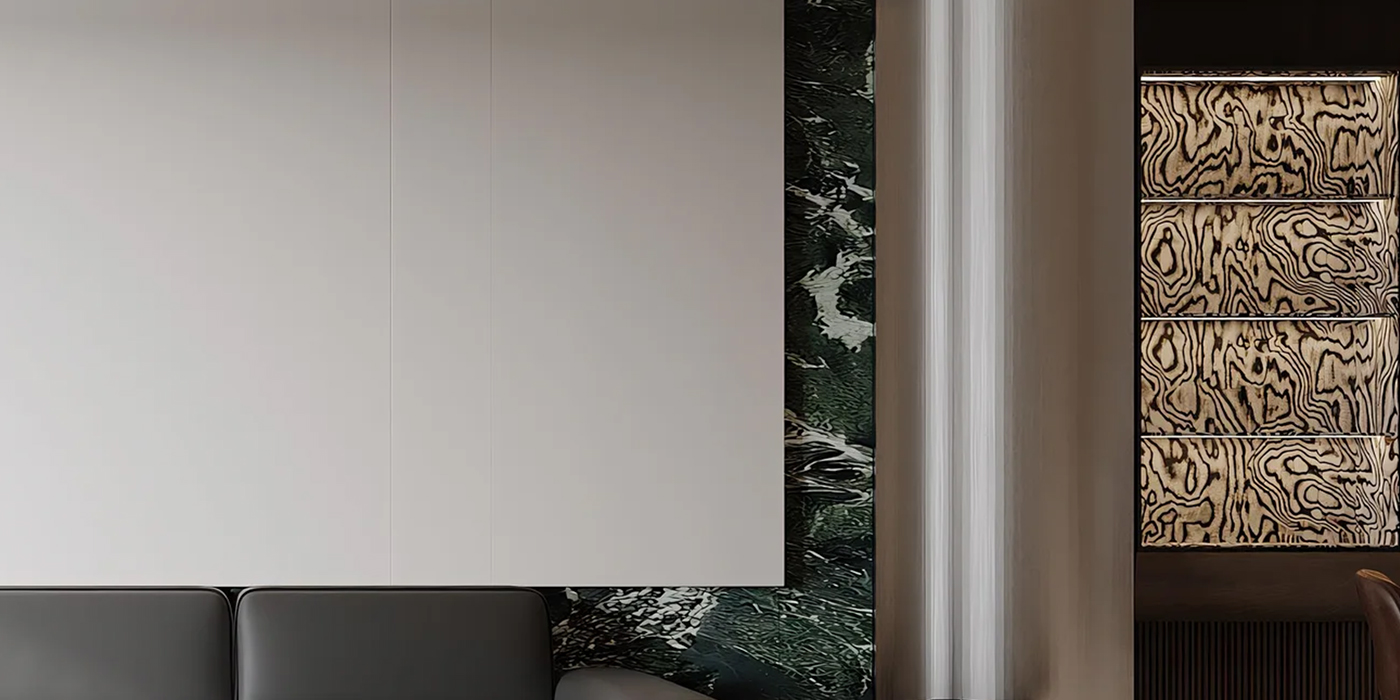
The veneer-to-core contact surface is 30% greater than flat panels, requiring special pressing techniques to ensure zero air bubbles. The result is a “grain flow” effect, where wood textures like walnut’s cathedral grain naturally follow th
Environmental Safety & Family-Friendly Design
Our curved panels use low-temperature eco-friendly adhesives, which help preserve the natural wood grain by avoiding high-heat damage. Formaldehyde emissions are ≤0.02 mg/m³—lower than typical straight-edge panels (0.025 mg/m³)—making them especially suitable for spaces with high environmental standards, such as children’s rooms and senior living areas.
The curved edges are finished with rounded corners and full wood veneer wrapping, leaving no exposed substrate. The surface is smooth and splinter-free, unlike traditional straight panels that may have sharp edges. This design eliminates the need for separate bumper strips, making it an ideal choice for homes with young children.
Installation Notes: Prevent Deformation of Curved Panels
Load-Bearing Design:
For large curved features (e.g., feature walls), install pre-embedded framing with spacing ≤30 cm. Use concealed brackets during installation to avoid damaging the veneer with exposed screws. Ensure load capacity ≥10 kg/m per linear meter to prevent sagging and veneer cracking.
Seamless Integration:
At the junction between curved panels and straight walls or cabinetry, use a 5 mm transition radius instead of a sharp joint. This allows the veneer to flow naturally from curve to flat surface, reducing stress and preventing edge lifting or warping.
Daily Maintenance: Focus on Dust-Prone Curved Areas
Cleaning:
Use a soft-bristle brush (e.g., wool brush) to clean dust from curved or recessed areas, such as the inner side of arched cabinetry. Avoid using rough cloths to prevent grinding dust into the veneer surface. For stubborn stains, use a slightly damp cotton cloth, wiping along the grain and arc direction—do not scrub sideways to avoid veneer lifting.
Protection:
Avoid direct sunlight on arc peaks, which are prone to fading. Consider applying UV-protective film. In humid regions (e.g., southern climates), leave a 2 cm ground clearance under curved panels (5 mm more than flat cabinets) to improve ventilation and reduce moisture buildup.
Repair:
If the veneer edge slightly lifts due to localized moisture, inject a small amount of eco-friendly adhesive with a syringe, press down with a weighted object (e.g., sandbag), and leave for 24 hours. For surface paint chips, use a color-matched repair paste, then sand gently along the curve with fine sandpaper after it dries to maintain surface smoothness.


Product Series