


Custom Cabinet
Natural Wood Veneer:
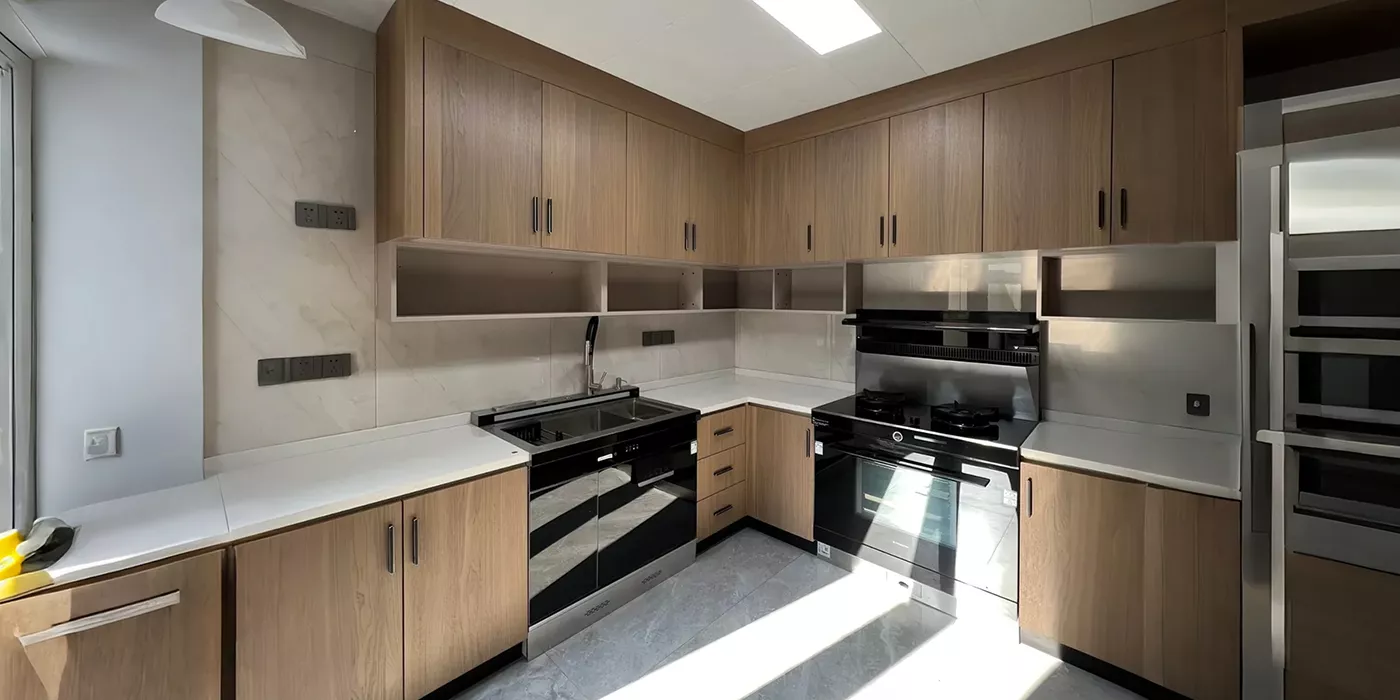
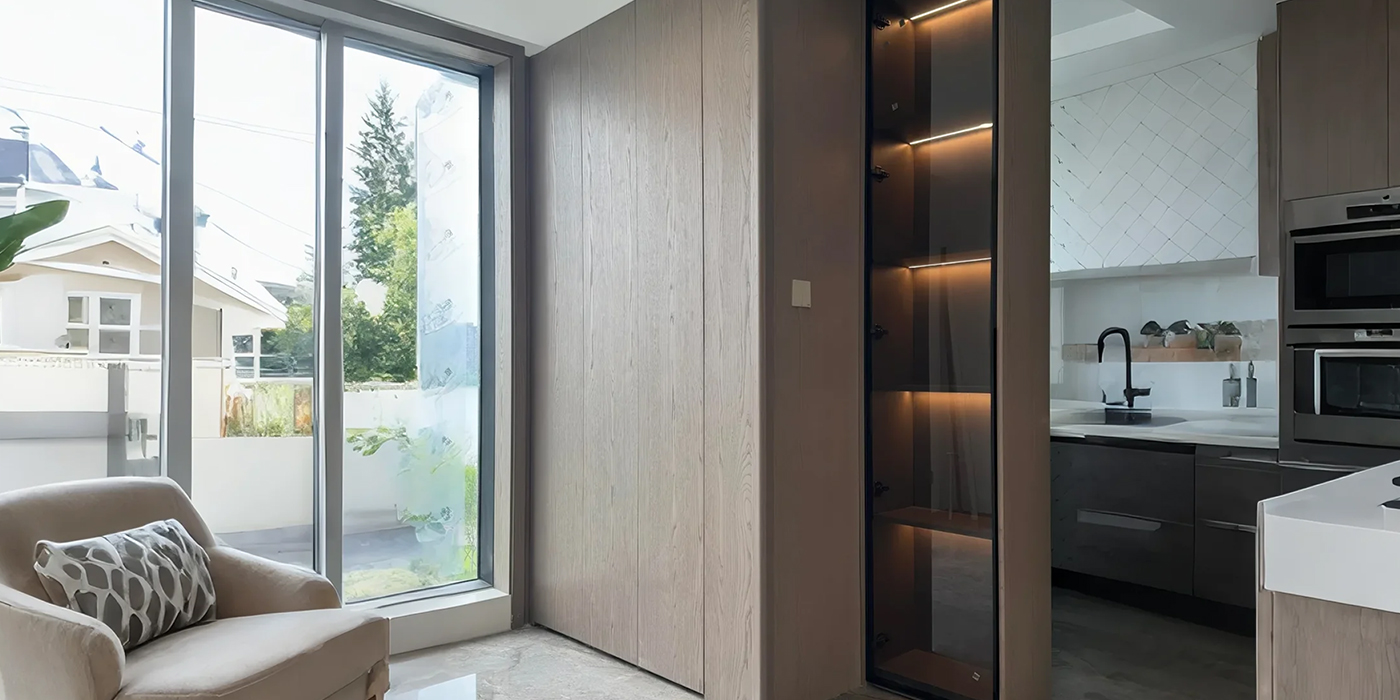
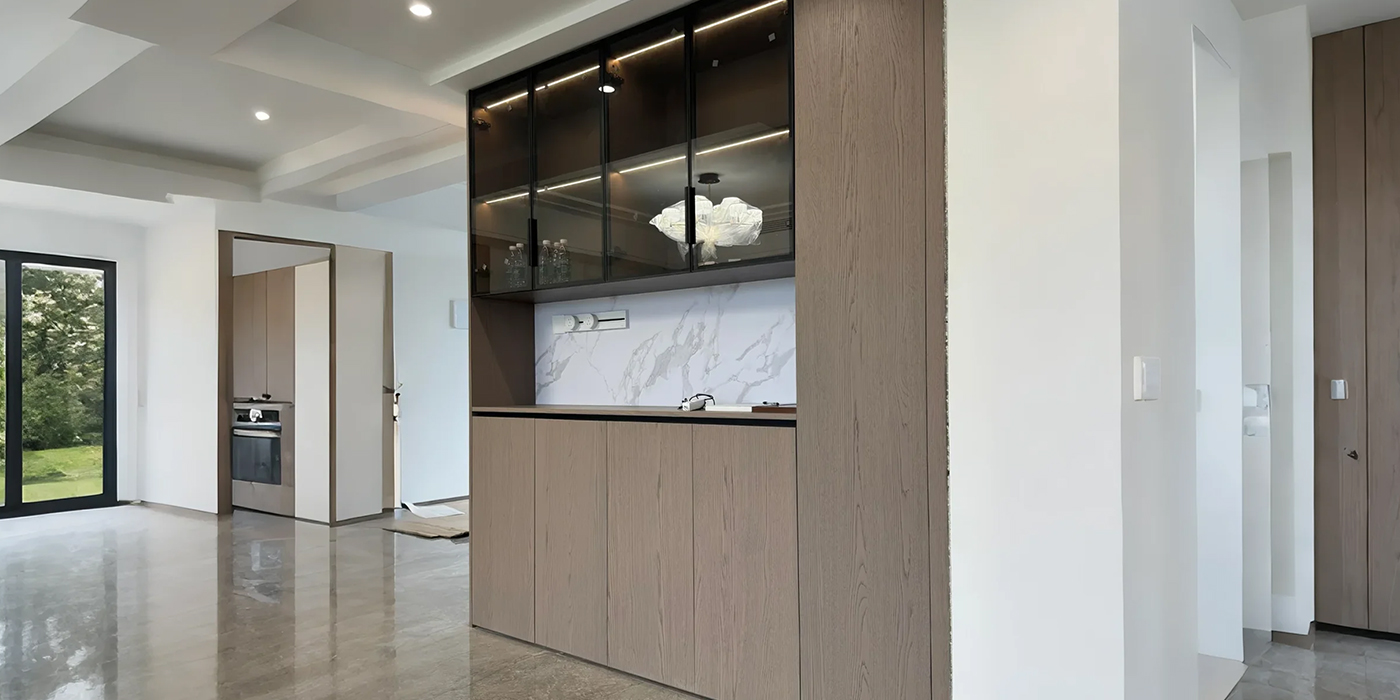
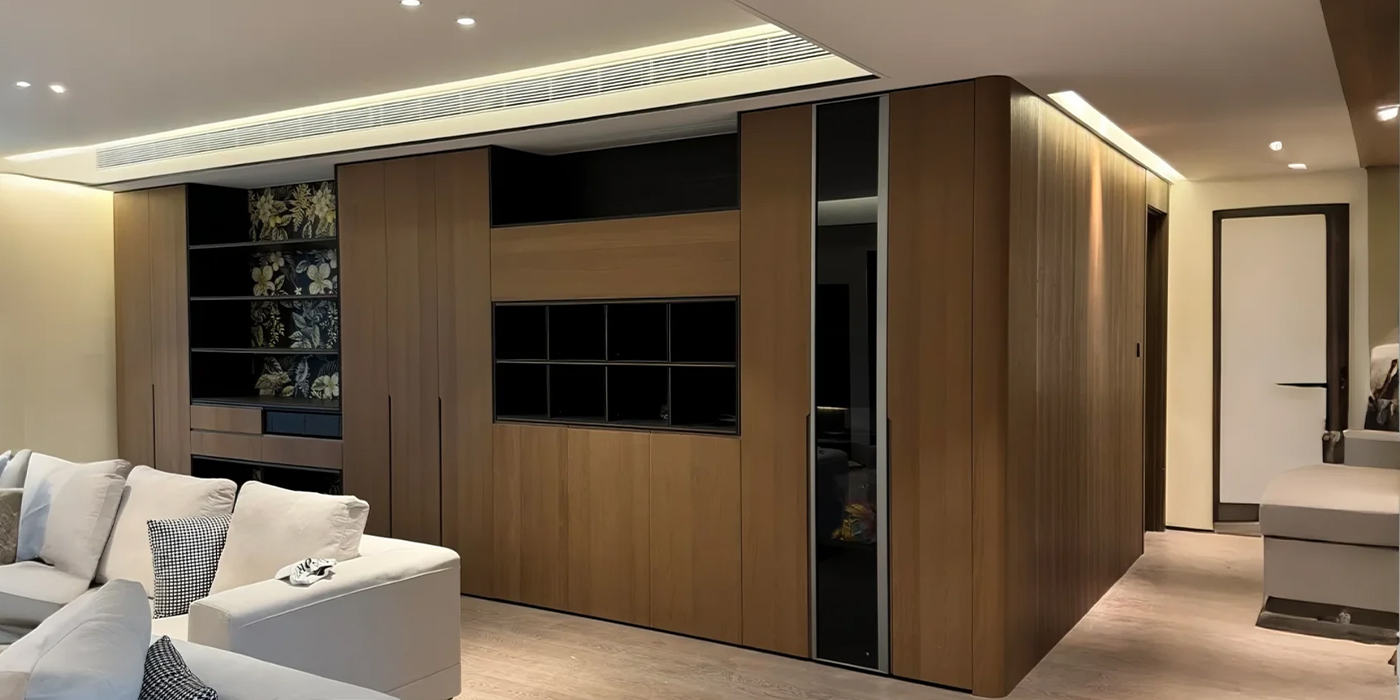
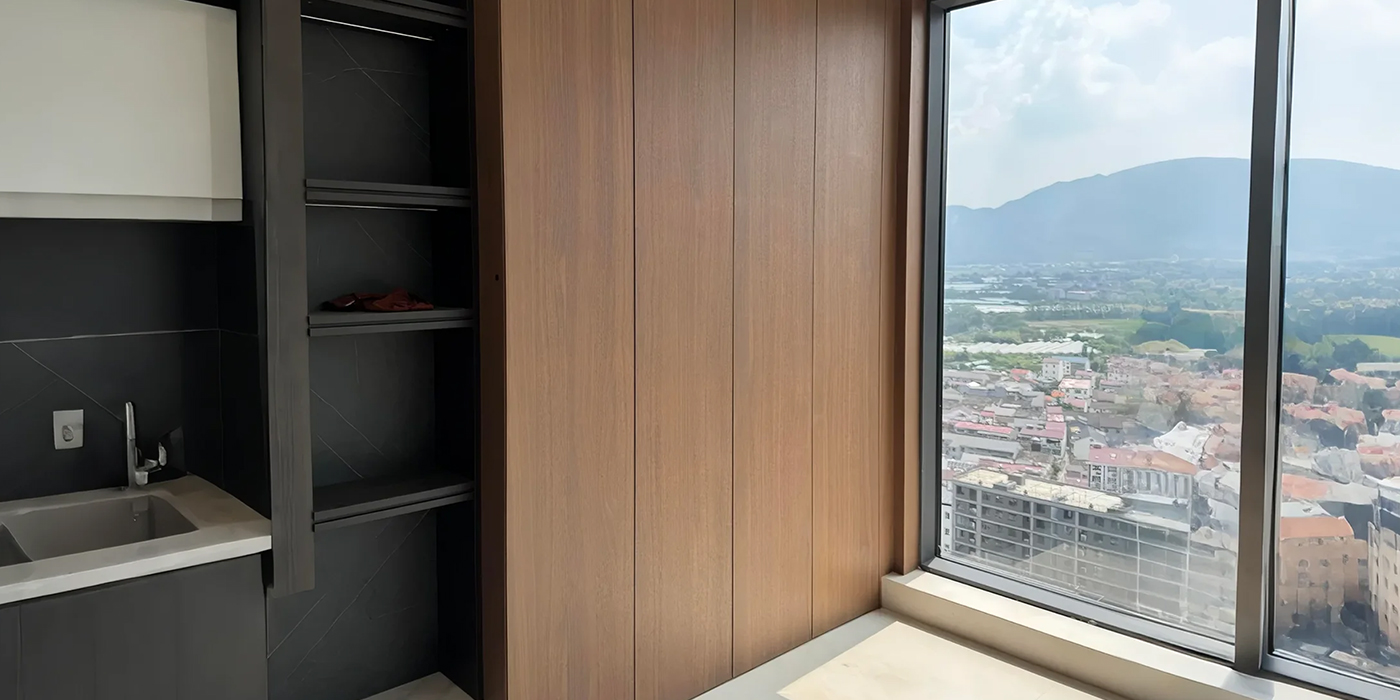
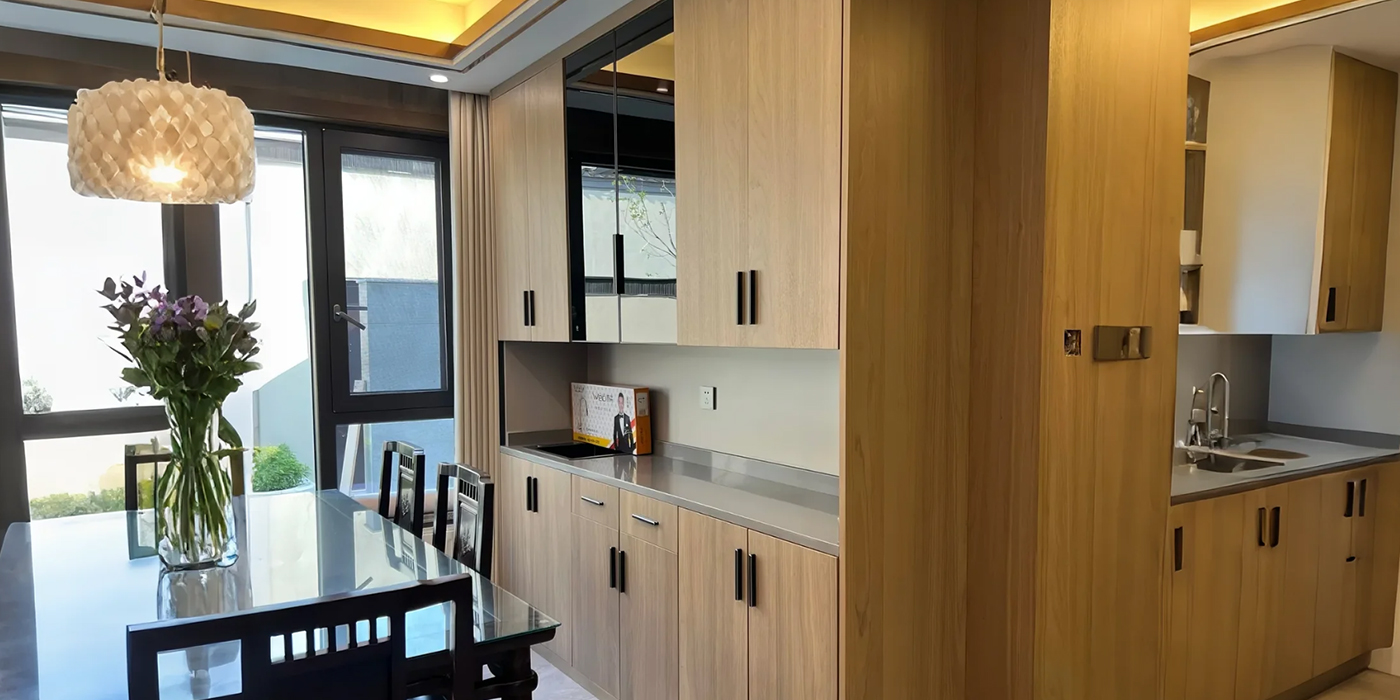
Each sheet retains the original grain of the wood—whether it's the bold cathedral pattern of walnut or the clean straight grain of white oak. The texture feels just like solid wood, with no two sheets alike, avoiding the repetitive look of industrial laminates.
Core Material Support:
The base layer is typically multi-ply solid wood board or particleboard, offering better dimensional stability than solid wood. This combination is especially suitable for humid southern climates or heated northern interiors, effectively preventing the cracking and warping that often occurs with solid wood due to temperature and humidity changes.
Eco-Friendly and Cost-Effective
The veneer bonding process uses eco-friendly adhesives such as plant-based starch glue. Combined with E0-grade core materials, total formaldehyde emissions are kept below 0.025 mg/m³, exceeding national safety standards—ideal for sensitive spaces like bedrooms and children’s rooms.
At just 60–70% the cost of solid wood cabinetry, it delivers a real-wood look and texture that’s nearly indistinguishable from the real thing—perfect for budget-conscious homeowners who still want premium quality and design.
Installation Notes
During transportation, wrap the panels with moisture-proof film to prevent discoloration caused by humidity. Before on-site installation, check wall flatness—if uneven by more than 3 mm, level the surface first to avoid uneven stress that could cause veneer cracking.
Mounting Method:
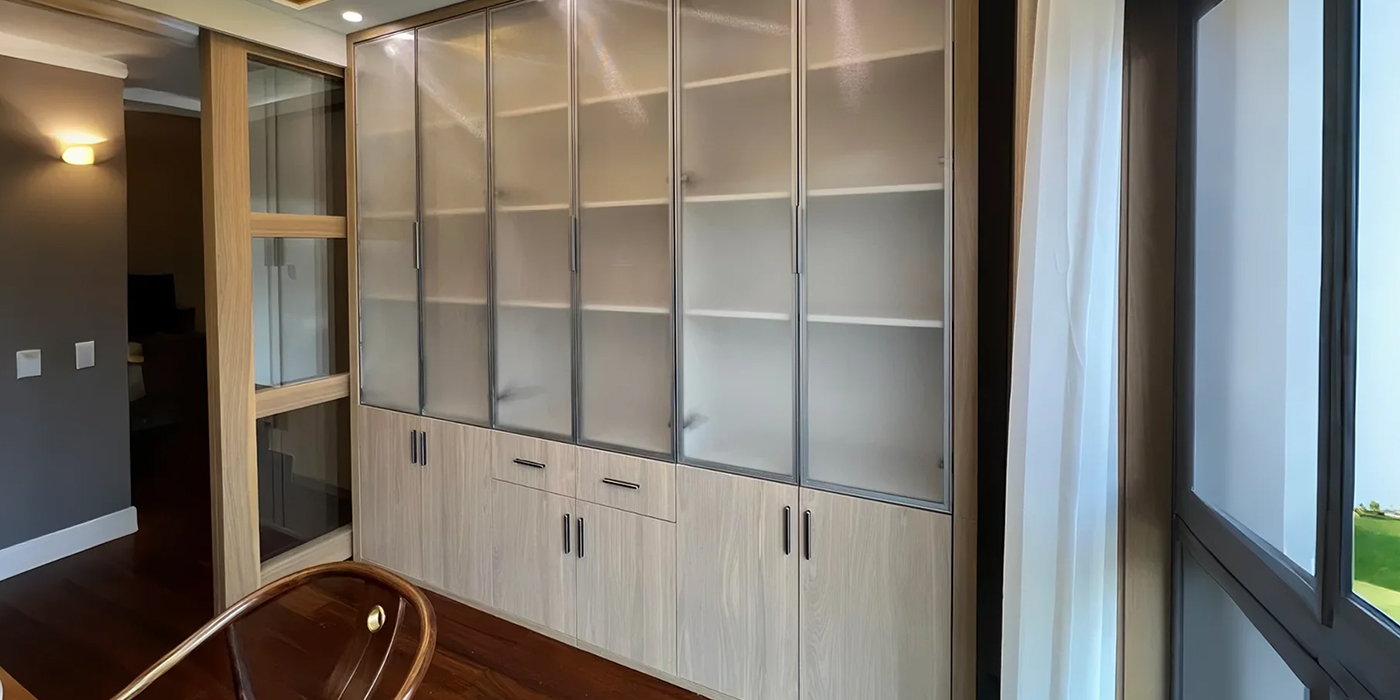
Use a combination of snap-on clips and expansion screws for installation. This method is lighter than traditional solid wood cabinets and does not require extra reinforcement. It ensures a snug fit against the wall, minimizing gaps and dust accumulation.
Daily Maintenance
Cleaning:
Wipe the surface with a slightly damp cotton cloth. Avoid covering the veneer with wet towels for long periods to prevent moisture absorption and warping. For stubborn stains, use a small amount of neutral cleaner (e.g., diluted soap water), and dry the surface immediately with a soft dry cloth.
Protection:
Avoid direct sunlight to prevent veneer discoloration—UV-protective film is recommended. Ensure heating or air-conditioning vents do not blow directly onto the cabinet surface to prevent localized drying and lacquer cracking.
Repair:
For minor paint chipping, apply a color-matched veneer repair paste (tinted as needed), then sand and wax the area after drying. This restores the surface to near-original condition at up to 80% lower cost than solid wood repairs.


Product Series